China takes advantage of the melting Arctic
Original title: China nutzt die schmelzende Arktis
Beijing senses profit and now wants to secure a place in the Arctic through a tried-and-tested approach: those who pay make demands.
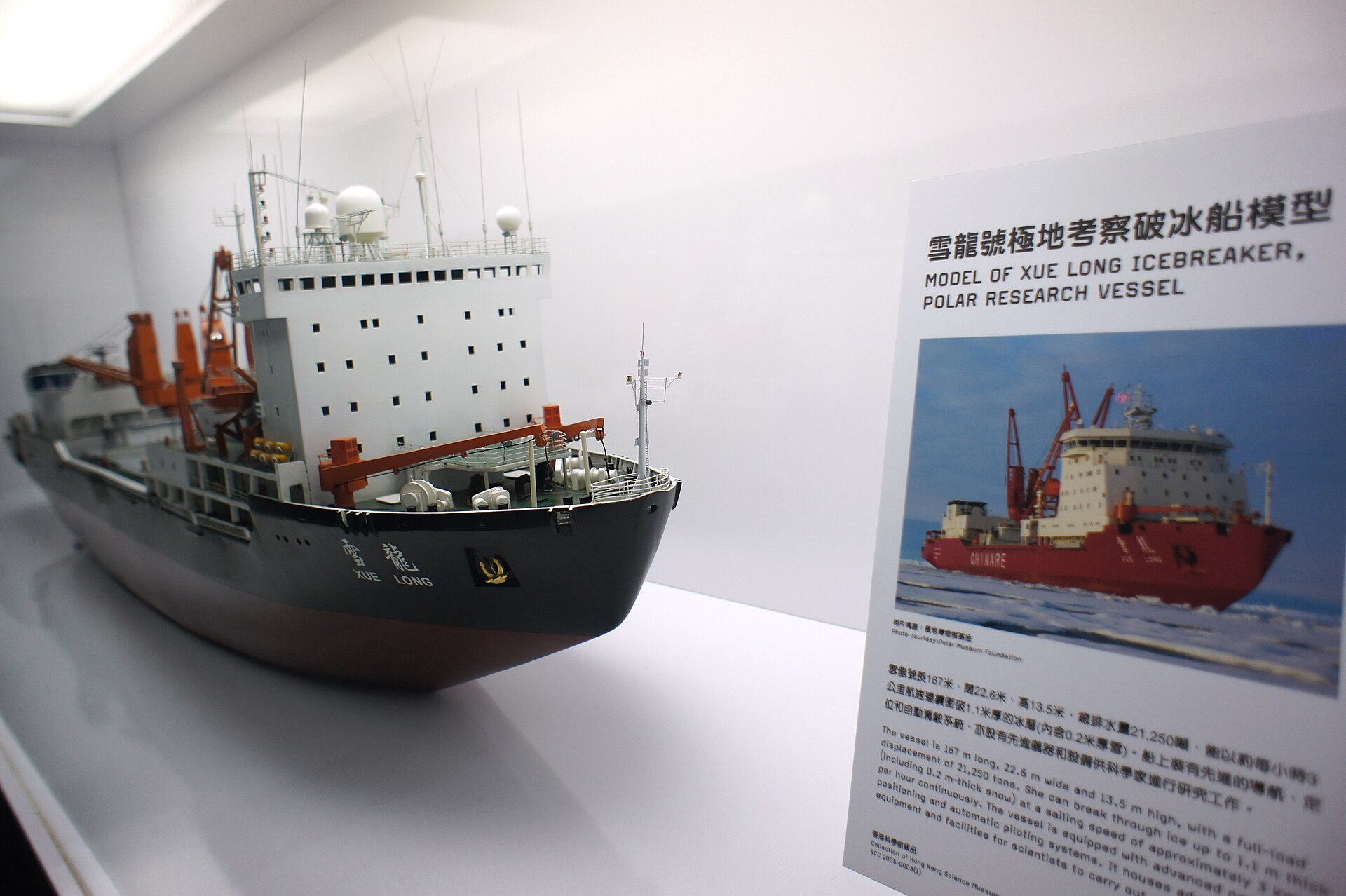
As the Arctic melts, the North Pole region appears to be becoming one of the world’s most valuable locations for natural resources such as oil, natural gas and a wide range of minerals.
Once the North Pole’s geopolitical resource potential became apparent, interest grew not only among many northern coastal states but particularly in Asia. Exploiting these mineral resources and the possibility of greater maritime access to the Arctic Ocean for transoceanic shipping are central concerns.
Opening the Arctic to resource exploration and extraction has created a need for unified, or at least coordinated, cooperation among Arctic states. The United States, Canada, Russia, Norway, Sweden, Finland and Denmark face both the benefits and the risks of accelerated development in this icy region.
In the near future, the Arctic Ocean will be the common denominator for rapid, positive development across the region, since imports and exports will probably have to move by sea. If things go wrong or problems arise, however, the states bordering the northern polar region would have to bear the costs of humanitarian assistance, disaster relief or necessary remediation.
The Arctic already hosts some of the world’s largest mining operations, but developing the roads, railways and ports needed to transport resources out of the region faces massive funding problems.
This raises the question: who exactly should finance Arctic infrastructure development? More importantly, the transition must take place within a properly secured framework designed for the unique risks of polar operations. An incident during resource extraction—at an oil, gas or mining site, for example—would have drastic consequences for the entire Arctic coastline and could cause serious damage far beyond the physical boundaries of the northern polar region.
Every Arctic state has the sovereign right to develop and regulate economic activities near its coast. All nevertheless share an obligation: resource extraction must be carried out by individuals and companies with the technical expertise to prevent incidents or, if something goes wrong, the financial capacity to pay for reimbursement, clean-up and compensation.
Unfortunately, the Arctic’s regional legal framework is, in many respects, a blank slate. There are no standards or legal procedures specifying exactly how to respond to such incidents, particularly their cross-border environmental effects.
The situation is further complicated by capital flowing into the Arctic from outside—for example, from China. Places such as Greenland, whose reserves are extremely limited, are willing to accept foreign capital. But if undercapitalised companies are not required to provide the necessary financial safeguards for resource-extraction projects, including the eventual closure of a mine or well, an environmental disaster is almost inevitable.
Resources are distributed unevenly across the Arctic, as are political attitudes towards development and the associated legal frameworks. A new CNA study of unrestricted foreign investment in the Arctic shows that foreign direct investment in the region is rising rapidly.
China is a major investor in Arctic countries and at the North Pole itself. From 2012 to July 2017, Chinese investment exceeded US$89.2 billion. By comparison, the entire Arctic economy is worth US$450 billion. Chinese investment focused particularly on energy, transport and infrastructure projects.
Russia received the most foreign investment during this period, followed by the United States and Canada in second and third place respectively. The economic and political context of these investments is significant. Chinese investment in Greenland, for example, may seem almost negligible in absolute terms, yet US$4 billion from China amounts to more than 185 per cent of Greenland’s GDP. That is strikingly high compared with other Arctic nations. Chinese investment in Canada amounts to 3.8 per cent of Canadian GDP, compared with 2.1 per cent of Russian GDP and 1.3 per cent of US GDP.
The United States records more transactions than any other Arctic nation, averaging US$368 million each, compared with US$790 million in Russia and US$568 million in Canada.
Several factors drive China’s resource strategy: secure access to natural resources, alternative transit routes, a presence in key markets and profit-taking. China is also actively present through research initiatives such as the Northern Lights Institute and political forums such as the Arctic Council. Large-scale inflows of foreign capital and labour can affect recipient countries’ political sovereignty. This could eventually leave Arctic states effectively trapped by Chinese money, with mining, oil and gas operators based in Asia.
China has created a legal framework ideally suited to its own investment in the Arctic and is already profiting from it. Objective regional standards for investment and transparency are nevertheless needed to ensure that states with weak or non-existent regulation do not become magnets for unscrupulous operators.