Security in Transition — The Future of the Arctic
The Arctic is a new centre of global security strategy. Independent analysis connects research and policy to support informed decisions.
Explore research →The countries of the Arctic
The Arctic is the northern polar region, not a country. At its centre lies the Arctic Ocean, surrounded by the lands of North America, Europe and Asia. Its sea-ice cover changes with the seasons. The region is home to Indigenous Peoples and other communities.
Eight states have territory in the Arctic and are members of the Arctic Council. Greenland belongs to the Kingdom of Denmark; Alaska is part of the United States. These are not additional states in this count.
- Canada
- Kingdom of DenmarkGreenland: a self-governing part of the Kingdom
- Finland
- IcelandGrímsey, at the Arctic Circle
- Norway
- Russia
- Sweden
- United StatesAlaska
Source: Arctic Council — the eight Arctic states
Arctic and Antarctic: the essential differences
Where do the polar regions begin? The polar circles, at roughly 66.6° north and south, provide a geographical reference. The Arctic can also be defined by climate or the northern tree line, so its boundaries vary with the definition. Polar day and polar night become longer towards the poles. NSIDC
Ocean in the north, continent in the south. While the Arctic centres on an ocean, Antarctica comprises the southern polar region around the ice-covered continent of Antarctica and its surrounding waters. There is no Indigenous population; research stations are staffed seasonally or year-round. International cooperation is governed by the Antarctic Treaty System. British Antarctic Survey
Ice, frozen ground and climate. Permafrost is ground that remains frozen for at least two consecutive years; it is not present everywhere in the polar regions. Ice loss also has different effects: melting glaciers and ice sheets on land raise sea levels, while melting floating sea ice has little direct effect on sea level. Permafrost · Ice and sea level
Polar Security in International Dialogue
Security in the polar regions is shaped by geopolitical change, environmental pressures, technological developments and international cooperation.
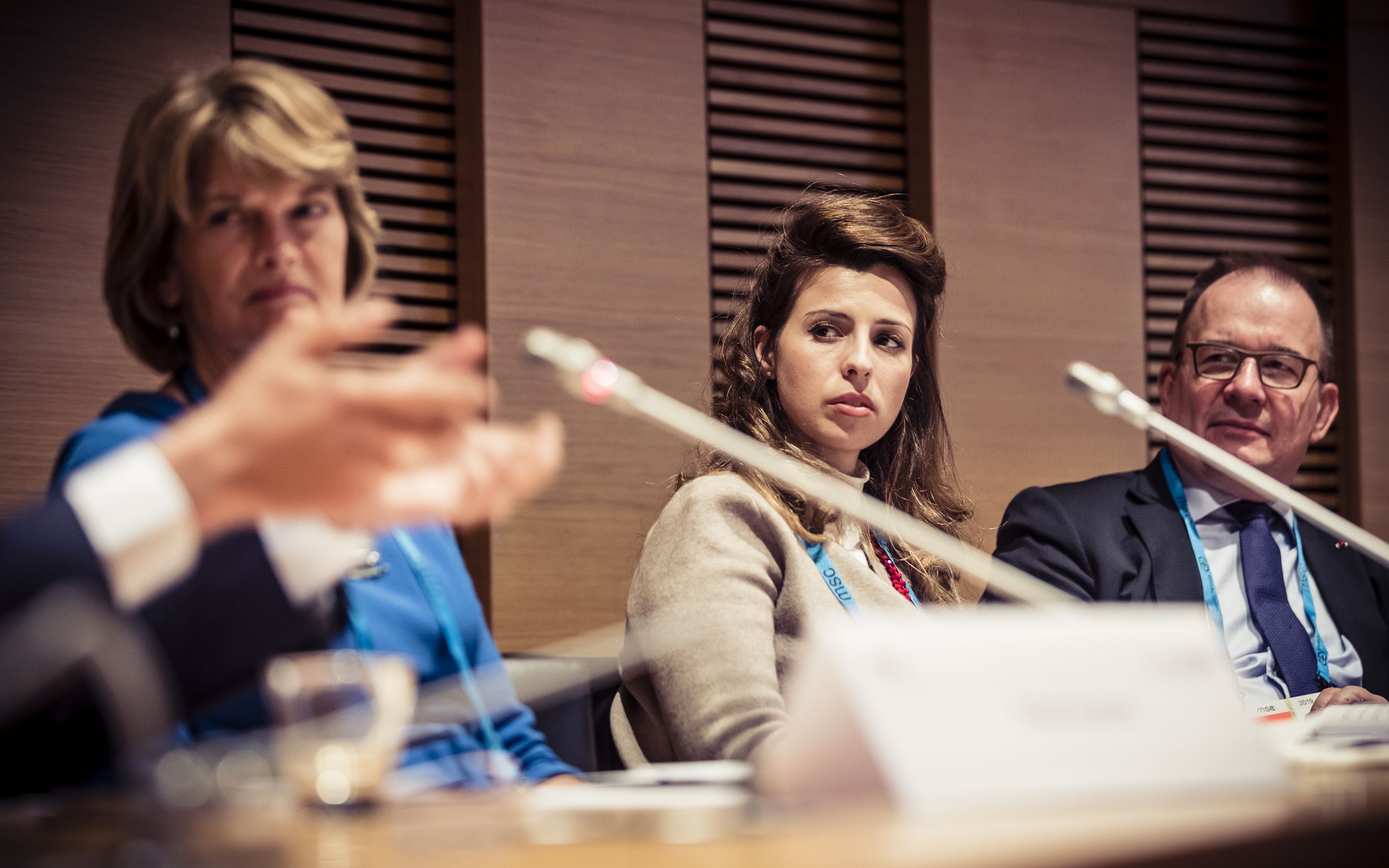
At the Arctic Security Roundtable in Helsinki, Isabelle-Constance Opalinski contributed her perspective to discussions with political and security-policy figures. The video and conference materials offer insight into this international dialogue on the future of Arctic and polar security.
New Shipping Routes, New Risks
Retreating sea ice opens new trade routes. Limited search-and-rescue capacity and unresolved sovereignty questions create new uncertainty.
Read the complete dossierPresence Is Not Yet Strategy
Military signals can deter, but can also increase the risk of miscalculation. The political objective behind presence is what matters.
Read commentaryTopic Dossiers
New Shipping Routes, New Risks
Navigation, rescue and environmental protection as traffic grows.
Indigenous Participation
Mechanisms for effective, sustainably funded representation.
Critical Minerals
Supply-chain risk, local value creation and environmental trade-offs.
Satellite Connectivity
Coverage gaps, resilience and dual-use questions.
Fisheries Control
Monitoring, port-state measures and precautionary rules.
Climate-Security Planning
From hazard maps to prioritised local investment.
Climate-Security Planning
Hazard maps become useful when they connect local priorities, essential services and long-term investment.
Read the climate-security dossierIsabelle-Constance Opalinski
International Security Policy Researcher | Arctic and Polar Geopolitics | Strategic Communications
Isabelle-Constance Opalinski is an international affairs researcher and strategic communications specialist with experience across European institutions, diplomatic missions, and international organizations.
Her work focuses on international security policy, Arctic and polar geopolitics, and emerging technological challenges. She combines policy analysis, media expertise, and academic research developed in international and multicultural environments.
Her work also includes journalism and public policy dialogue, including participation in the Munich Security Conference’s Arctic Security Roundtable in Helsinki.
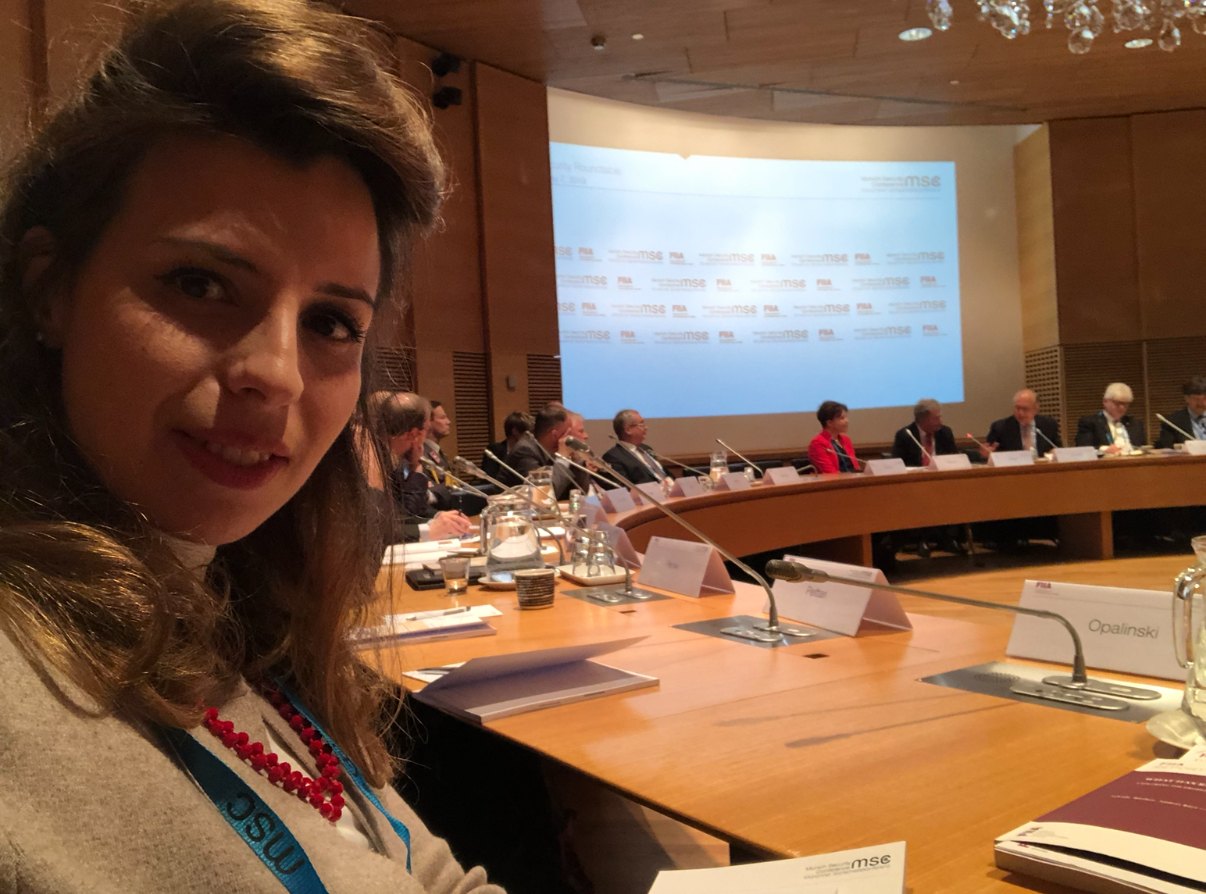 HELSINKI · 7 MAY 2019At the Arctic Security RoundtableIsabelle-Constance Opalinski at the conference table with fellow participants.See the full photo journal →Earlier work also appeared as Isabelle-Constance v. Opalinski and Isabelle-Constance V. Opalinski.
Contact the editor
A question about an article or a correction to suggest? Write to info@arctic-politics.com.