Research
Robust analysis for responsible Arctic policy.
Six topics shaping Arctic policy
Concise editorial introductions to the issues and policy choices. Editorial review: 16 October 2026.
 MARITIME SECURITY · ISABELLE-CONSTANCE OPALINSKI
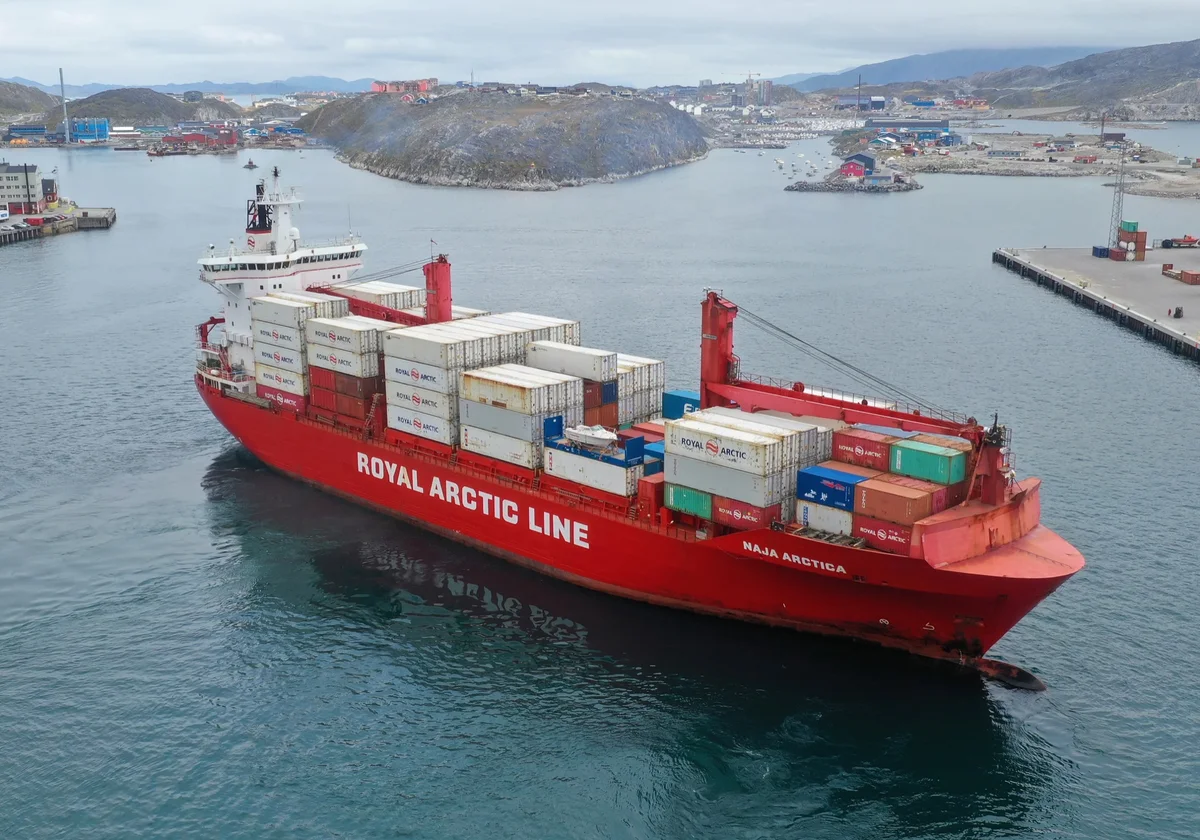
New Shipping Routes, New Risks
Less sea ice can lengthen regional navigation seasons. It does not automatically create safe or year-round trade routes: ice, weather, vessel capability and infrastructure still matter.
Naja Arctica, Nuuk · Quintin Soloviev · CC BY 4.0Show or hide briefing ↓
New Shipping Routes, New Risks
Less sea ice can lengthen regional navigation seasons. It does not automatically create safe or year-round trade routes: ice, weather, vessel capability and infrastructure still matter.
Naja Arctica, Nuuk · Quintin Soloviev · CC BY 4.0Show or hide briefing ↓Why it matters
PAME recorded 1,812 distinct ships in the Arctic Polar Code area in 2025, 40 percent more than in 2013. This is not a count of transit voyages. Remoteness and limited rescue capacity remain risks. Since 1 January 2026, additional Polar Code navigation and voyage-planning requirements cover specified smaller vessels, including fishing vessels at least 24 metres in overall length.
Policy assessment
Arctic Policy recommends distinguishing traffic forecasts by route and activity. Investment should combine current charts, ice and weather information, qualified crews, emergency communications and funded rescue capacity. A longer season with less ice does not replace an assessment of each voyage.
Sources & further reading
These sources support the factual background. The policy assessment is Arctic Policy’s editorial analysis; it is not presented as a recommendation endorsed by the source organisations.
- PAME / Arctic Council · Arctic shipping update (2026)Vessel activity in the Arctic Polar Code area, 2013–2025.
- IMO · Polar CodeBackground on safety and environmental requirements; see the next source for the 2026 extensions.
- IMO · Shipping rules in force from 1 January 2026Navigation and voyage planning for additional vessel categories.
Historical article from the archive: A new Silk Road through the eternal ice (12.05.2019)
 GOVERNANCE · ISABELLE-CONSTANCE OPALINSKI
Indigenous Participation
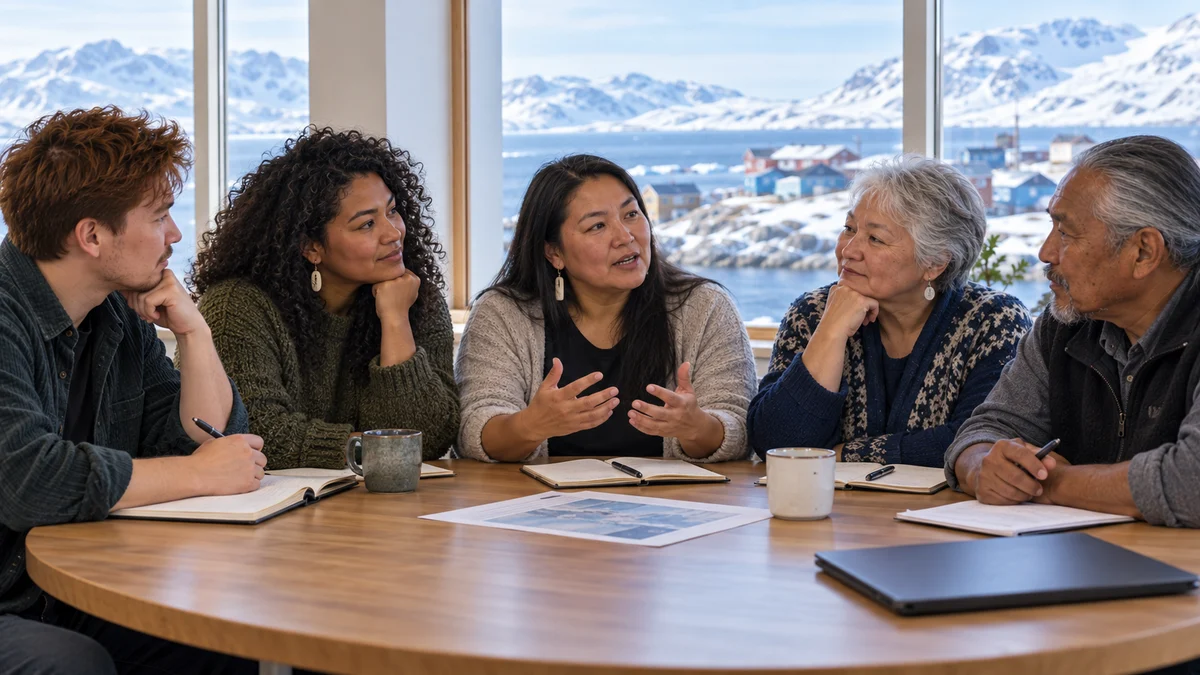
Indigenous Peoples hold distinct rights and knowledge systems. Meaningful participation should involve their own chosen representatives from the outset.
AI illustration · Imagined Indigenous participationShow or hide briefing ↓
Indigenous Participation
Indigenous Peoples hold distinct rights and knowledge systems. Meaningful participation should involve their own chosen representatives from the outset.
AI illustration · Imagined Indigenous participationShow or hide briefing ↓Why it matters
Six Indigenous organisations have Permanent Participant status in the Arctic Council, with full consultation rights. Council decisions nevertheless require consensus among its eight member states. Article 32 of the UN Declaration on the Rights of Indigenous Peoples calls for consultation and cooperation to obtain free, prior and informed consent before projects affecting their lands or resources are approved.
Policy assessment
Arctic Policy recommends reliable funding for participation, translation and independent advice. Processes should explain how contributions influence decisions and respect Indigenous control over knowledge. Participation in the Arctic Council does not replace project-specific procedures.
Sources & further reading
These sources support the factual background. The policy assessment is Arctic Policy’s editorial analysis; it is not presented as a recommendation endorsed by the source organisations.
- Arctic Council · Permanent ParticipantsSix Indigenous organisations and their consultation rights.
- Arctic Council · Organisation and decision-makingConsensus decisions of the eight member states.
- UN · Declaration on the Rights of Indigenous PeoplesRights, participation and the consent standard in Article 32.
Historical article from the archive: A place for friendly dialogue? (23.07.2019)
 RESOURCES & RESILIENCE · ISABELLE-CONSTANCE OPALINSKI
Critical Minerals
The IEA’s 2026 outlook describes growing mineral demand and risks from concentrated supply chains. GEUS documents Greenland’s resource potential; geological potential is not the same as assured production.
AI illustration · Rock specimensShow or hide briefing ↓
Critical Minerals
The IEA’s 2026 outlook describes growing mineral demand and risks from concentrated supply chains. GEUS documents Greenland’s resource potential; geological potential is not the same as assured production.
AI illustration · Rock specimensShow or hide briefing ↓Why it matters
The IEA distinguishes mining from processing and downstream manufacturing: new mines alone do not remove dependencies. Arctic proposals therefore also need scrutiny of energy supply, transport, finance, environmental impacts and affected rights.
Policy assessment
Arctic Policy recommends assessment across the project lifetime: transparent supply chains, funded restoration, local value creation and early participation. Where Indigenous lands are affected, the UN Declaration’s consent standard should inform the process. Recycling and material efficiency should complement additional supply.
Sources & further reading
These sources support the factual background. The policy assessment is Arctic Policy’s editorial analysis; it is not presented as a recommendation endorsed by the source organisations.
- IEA · Global Critical Minerals Outlook 2026: OutlookDemand, mining projects and bottlenecks in processing and manufacturing.
- GEUS · Review of the critical raw material resource potential in Greenland (2023)Geological potential, not a guarantee of future production.
- UN · Declaration on the Rights of Indigenous PeoplesRights, participation and the consent standard in Article 32.
Historical article from the archive: Canada’s Role (31.12.2023)
 INFRASTRUCTURE · ISABELLE-CONSTANCE OPALINSKI
Satellite Connectivity
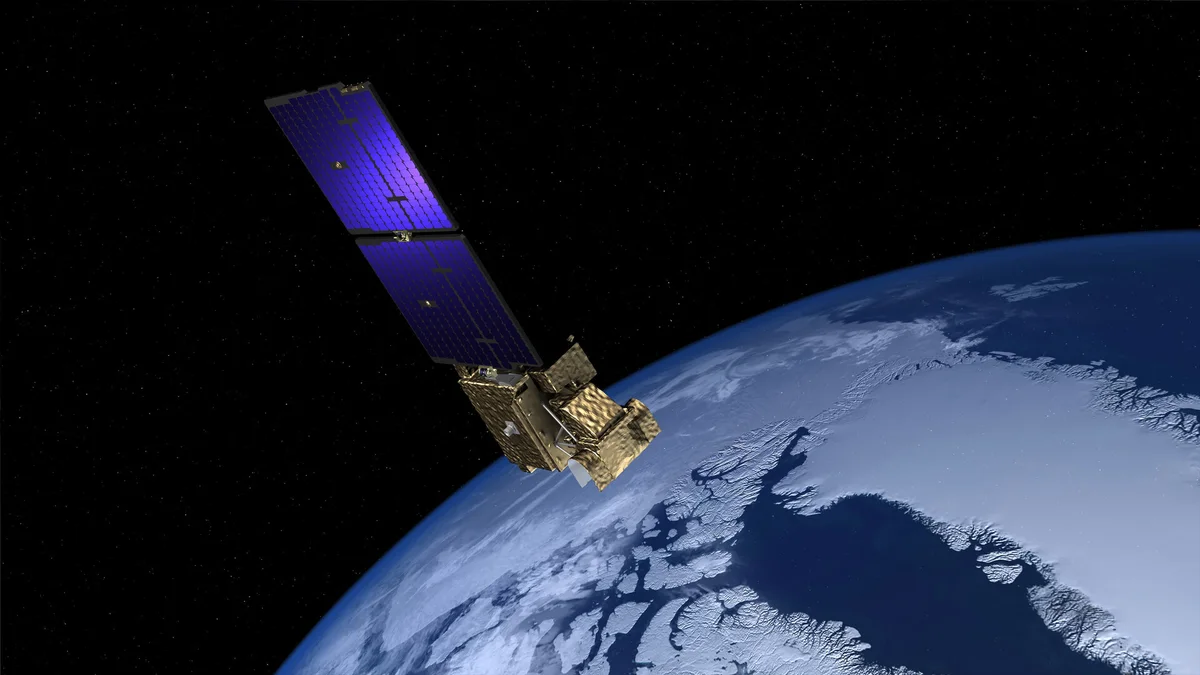
Shipping, research, emergency services and remote communities need reliable communications. New satellite systems expand northern connectivity options; they do not automatically ensure affordable access everywhere.
Weather observation · ESA–J. Huart · CC BY-SA 3.0 IGOShow or hide briefing ↓
Satellite Connectivity
Shipping, research, emergency services and remote communities need reliable communications. New satellite systems expand northern connectivity options; they do not automatically ensure affordable access everywhere.
Weather observation · ESA–J. Huart · CC BY-SA 3.0 IGOShow or hide briefing ↓Why it matters
Geostationary satellites sit low on the horizon at high latitudes. Space Norway’s Arctic Satellite Broadband Mission instead uses highly elliptical orbits and carries civilian and military communications payloads. Technical coverage alone does not establish the availability of terminals, affordable tariffs or local connections.
Policy assessment
Arctic Policy recommends combining satellite links with terrestrial networks and backup connections. Procurement should assess available capacity, resilience, emergency priorities, cybersecurity and actual user costs. Civilian services need clear commitments when security users compete for capacity.
Sources & further reading
These sources support the factual background. The policy assessment is Arctic Policy’s editorial analysis; it is not presented as a recommendation endorsed by the source organisations.
- Space Norway · Arctic Satellite Broadband MissionOperator information on orbits and civilian and military payloads.
- Space Norway · ASBM payloads ready for government service (7 May 2025)A dated milestone; rollout plans at that time do not establish current availability for every user.
Historical article from the archive: Canada’s Role (31.12.2023)
 OCEANS · ISABELLE-CONSTANCE OPALINSKI
Fisheries Control
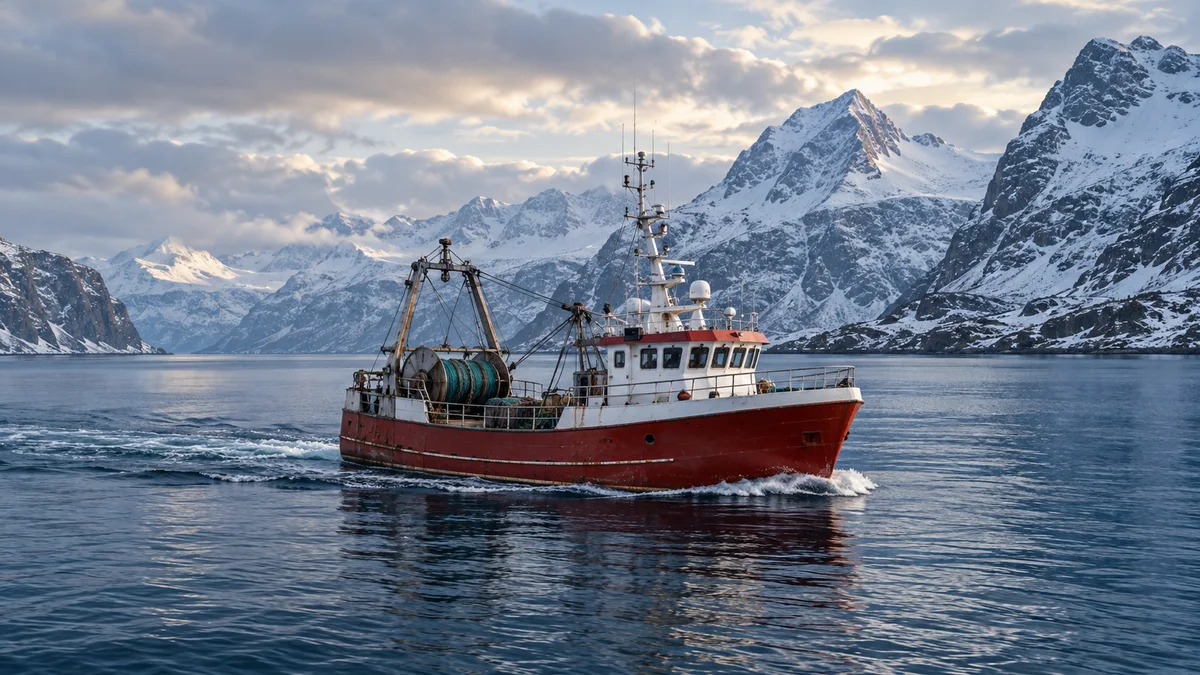
Existing Arctic fisheries and potential activity in the high seas of the central Arctic Ocean operate under different rules. Less ice does not automatically open new fishing grounds.
AI illustration · Fishing in the High NorthShow or hide briefing ↓
Fisheries Control
Existing Arctic fisheries and potential activity in the high seas of the central Arctic Ocean operate under different rules. Less ice does not automatically open new fishing grounds.
AI illustration · Fishing in the High NorthShow or hide briefing ↓Why it matters
The central Arctic Ocean agreement covers its high seas, not all Arctic waters. It limits authorisation of commercial fishing to the conservation and management measures it specifies and establishes a framework for joint research. Separately, the FAO Port State Measures Agreement seeks to keep catches from illegal, unreported and unregulated fishing out of markets.
Policy assessment
Arctic Policy recommends making each regime’s geographical scope clear and combining port-state controls, vessel monitoring and information exchange. Decisions on new fisheries should take account of scientific evidence, Indigenous knowledge and the applicable management rules.
Sources & further reading
These sources support the factual background. The policy assessment is Arctic Policy’s editorial analysis; it is not presented as a recommendation endorsed by the source organisations.
- Central Arctic Ocean fisheries agreement · Treaty textArticles 1–4: area, fishing rules and joint research programme.
- FAO · Agreement on Port State MeasuresPort-state measures against illegal, unreported and unregulated fishing.
Historical article from the archive: Ways to Protect the Arctic (16.06.2022)
 ADAPTATION · ISABELLE-CONSTANCE OPALINSKI
Climate-Security Planning
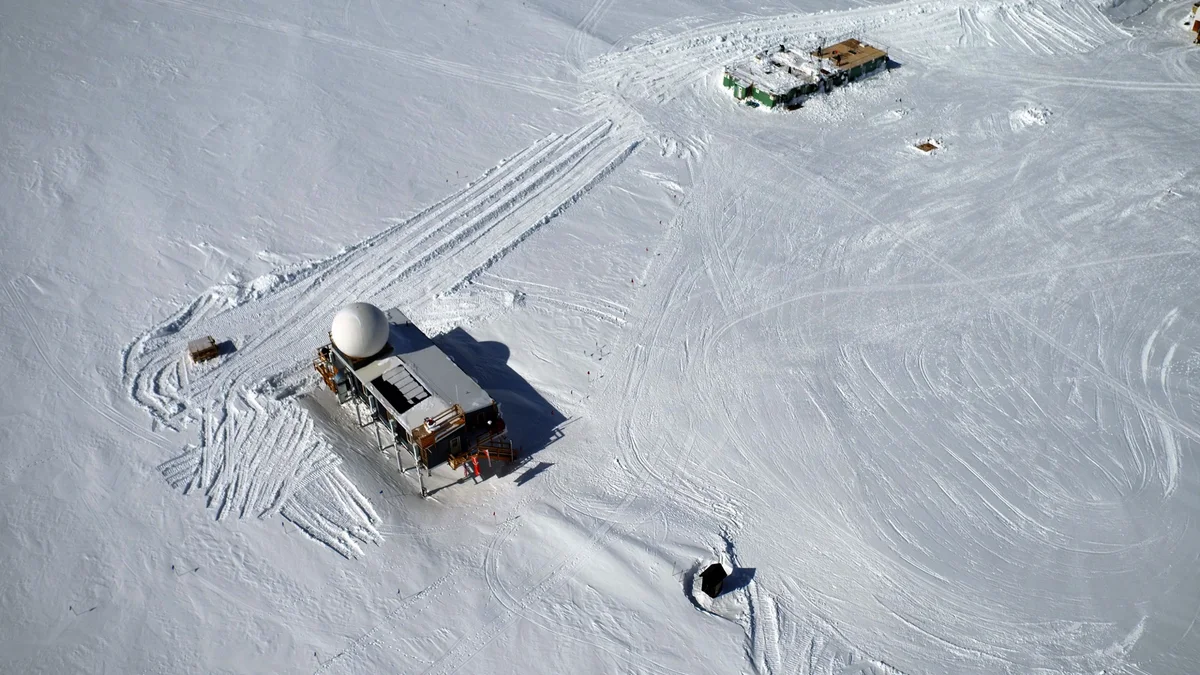
Thawing permafrost, coastal erosion and changing ice conditions threaten infrastructure and essential services in many places. The type and severity of risk vary substantially by location.
Summit Camp, Greenland · CC BY-SA 4.0Show or hide briefing ↓
Climate-Security Planning
Thawing permafrost, coastal erosion and changing ice conditions threaten infrastructure and essential services in many places. The type and severity of risk vary substantially by location.
Summit Camp, Greenland · CC BY-SA 4.0Show or hide briefing ↓Why it matters
NOAA’s 2025 Arctic strategy identifies risks in Alaska from erosion, permafrost thaw and shorter periods of safe river and sea-ice travel. These processes can affect buildings, transport connections and local safety. A regional assessment cannot replace investigation of local ground conditions, coastlines and patterns of use.
Policy assessment
Arctic Policy recommends combining hazard maps with local observations and several future scenarios. Funding should cover maintenance, protection and adaptation of essential services. Where these measures are insufficient, affected communities should help shape decisions about possible relocation and its social consequences from an early stage.
Sources & further reading
These sources support the factual background. The policy assessment is Arctic Policy’s editorial analysis; it is not presented as a recommendation endorsed by the source organisations.
- NOAA · Arctic Vision and Strategy (2025)Observed risks and planning priorities, particularly for Alaska.
- IPCC · Polar Regions (2022)Further regional assessment of climate impacts and adaptation.
Historical article from the archive: The clock is ticking at the North Pole (01.02.2020)
Latest Arctic security research
Automatically refreshed from DOI-indexed academic journals selected for Arctic security relevance.
Selection: recent journal articles with a DOI, an explicit Arctic focus and security-relevant terms, limited to a curated journal list. Metadata: Crossref.