Germany—a neutral actor at the North Pole
Original title: Deutschland - ein neutraler Akteur am Nordpol
Arctic warming affects climate and weather around the world—including Germany, around 2,000 kilometres from the North Pole.
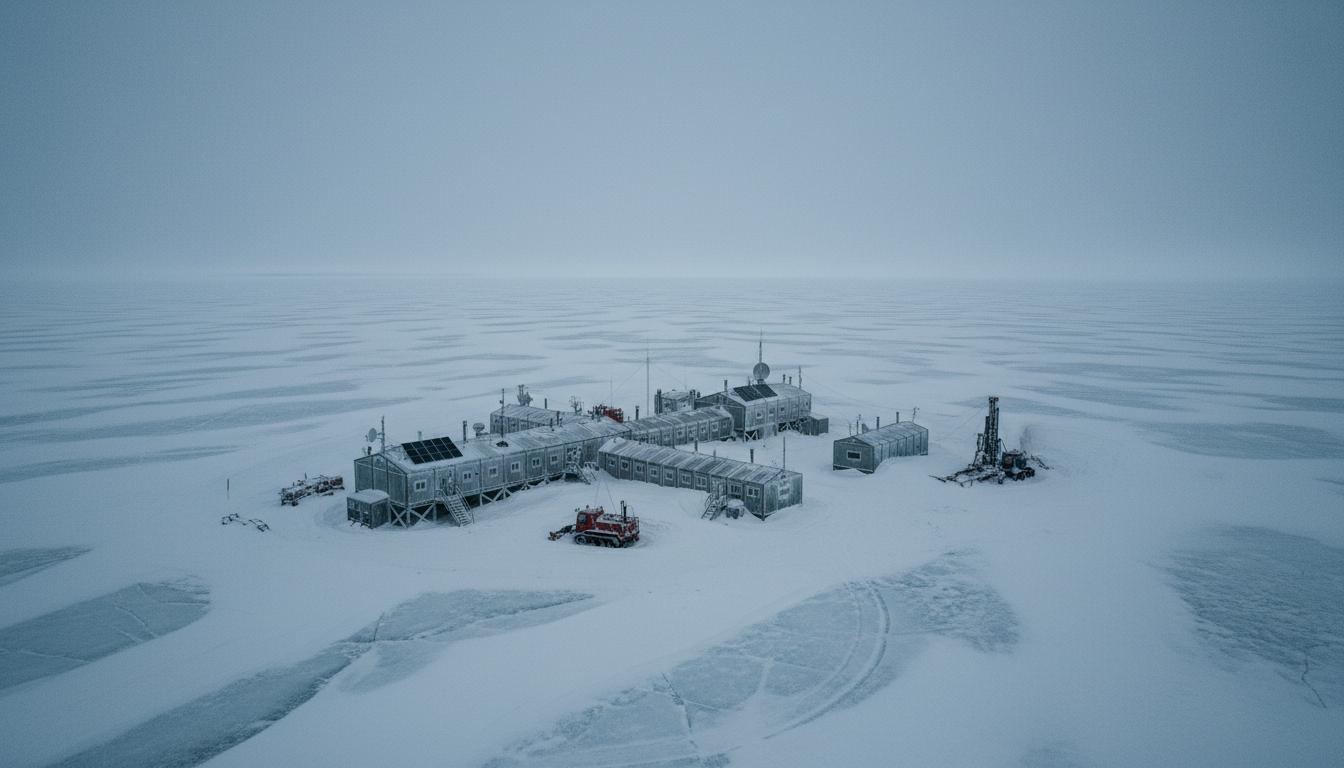
Germany plans to take a more active role in the Arctic, citing the High North’s growing environmental, political and economic importance.
The Arctic is becoming an increasingly important region in world politics. The German cabinet therefore recently adopted a resolution in line with Germany’s Arctic policy guidelines, declaring its intention to send German experts to advise the Arctic Council, whose permanent secretariat is in Tromsø, Norway. Germany also plans to advocate expanding protected areas in the Arctic and to explore the shipping potential of the increasingly ice-free Northwest and northern passages during the summer months.
During his August visit to the Canadian Arctic, Heiko Maas witnessed the dramatic changes already caused by climate change. ‘In the Arctic, climate change is no longer a future scenario, but a reality,’ the Foreign Minister said.
Following an August meeting with Nordic leaders, Chancellor Angela Merkel likewise said that Germany, as an Arctic Council observer, would ‘keep an eye on the Arctic’s strategic role’. Germany would also seek to prevent the Arctic from becoming ‘an object of reckless exploitation and environmental destruction’, she said.
Germany is represented on the Arctic Council by the Federal Foreign Office, which seeks to strengthen German contributions to the Council’s activities. Participation in its working groups and task forces, in particular, has improved considerably in recent years. German experts have been appointed to all working groups and task forces. The German Arctic Office supports the Foreign Office in selecting these scientific experts and ensures that meeting reports and recommendations for action are made available.
The Arctic Council was established by the Ottawa Declaration in 1996 and comprises Denmark, Finland, Iceland, Canada, Norway, the Russian Federation, Sweden and the United States. Six organisations representing Arctic Indigenous peoples are Permanent Participants: the Aleut International Association, Arctic Athabaskan Council, Gwich’in Council International, Inuit Circumpolar Council, Russian Association of Indigenous Peoples of the North, and Saami Council. Germany and twelve other non-Arctic states—China, France, the United Kingdom, Italy, India, Japan, the Republic of Korea, the Netherlands, Poland, Switzerland, Singapore and Spain—are Arctic Council observers. Fourteen governmental organisations and twelve non-governmental organisations also have observer status.
The Arctic Council’s assessment reports and recommendations are based on its working groups’ analyses and evaluations. Its six permanent working groups are its most important instruments:
Arctic Contaminants Action Program (ACAP); Arctic Monitoring and Assessment Programme (AMAP); Conservation of Arctic Flora and Fauna Working Group (CAFF); Emergency Prevention, Preparedness and Response Working Group (EPPR); Protection of the Arctic Marine Environment (PAME); and the Sustainable Development Working Group (SDWG).
The German government hopes to send further experts to the working groups and has announced that it will continue co-funding research projects.
The Chancellor attended the Nordic heads of government’s informal summer meeting as a guest. Many countries in the High North aim to achieve climate neutrality considerably earlier than Germany—Iceland by 2040, for example, ten years ahead of Germany. Merkel said Germany remained committed to the target year of 2050.
On the island of Videy near Reykjavik, Iceland, Merkel met leaders and politicians from Denmark, Finland, Iceland, Norway and Sweden. Their discussions focused primarily on Arctic climate policy, but also on transatlantic relations. Merkel said: ‘We are here at the tectonic junction between the European and American parts. We can see how connected this world is: although the parts have drifted somewhat apart over the past 9,000 years, they are still very close together—and so, of course, we will also discuss our transatlantic relations.’
Merkel also visited a geothermal power plant in Iceland. Hellisheidi is the country’s largest plant of its kind, producing heat and electricity from hot water and steam. A project at the plant also captures climate-damaging CO₂ from the air and stores it in rock.
Global warming is felt considerably more strongly in northern Europe and North America than in other parts of the world. Retreating ice also opens access to resources such as gas and to new shipping routes, including the Northwest and Northeast passages. Not least, there are fears of an arms race among the major powers in the region.
‘Where there used to be ice, there are now rocks and water,’ Foreign Minister Maas observed with concern, noting that the Arctic was warming roughly twice as fast as the rest of the world. He added that the cost of inaction would certainly exceed the cost of action.
The consequences of Arctic climate change would be dramatic as glaciers melt, sea-ice cover shrinks and sea levels rise. Germany’s Environment Ministry has also issued strong warnings. Germany itself could certainly be affected by these developments.
Germany will clearly miss its 2020 climate target of reducing greenhouse-gas emissions by 40 per cent compared with 1990, as well as its 2020 target of one million electric cars on German roads. Environmentalists nevertheless hope that Merkel will make a renewed push against global heating in the final stretch of her time in office, which is due to end by 2021 at the latest.