Canada’s Role
Original title: Die Rolle Kanadas
Geopolitics has moved the Canadian Arctic from the margins of strategic thinking to the forefront of great-power rivalry. How will Arctic strategy develop?
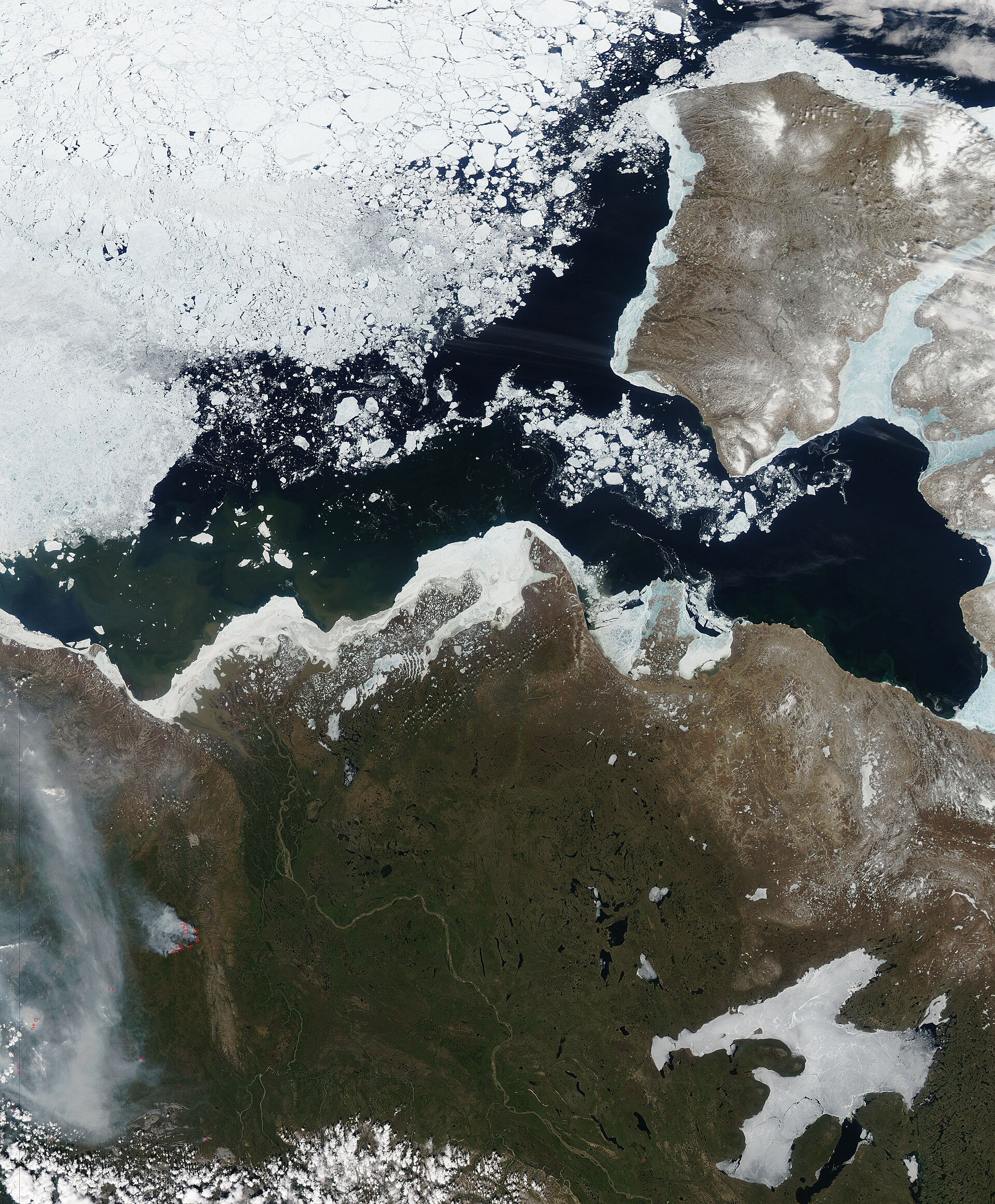
The United States is rapidly adapting to the new reality in the Arctic region and calling on allies and other partners to do the same. But will Ottawa lead the American approach, follow it, or get out of the way?
Four key insights underline the urgency for Canada to reconsider and strengthen its own engagement in the Arctic.
New threats
Throughout the Cold War, Russia posed a threat to US and Canadian interests in the Arctic, leading, among other things, to the establishment of NORAD in 1957. In recent years, that threat has re-emerged as Russia has significantly expanded its military capabilities and infrastructure in the region, including by building or renovating major ports and bases.
The invasion of Ukraine in 2022 has only deepened Western fears about possible Russian moves in the Arctic. Although President Vladimir Putin has withdrawn some of his military resources from northern Siberia, he remains capable of launching major strategic initiatives that could threaten the North American Arctic over the long term.
China, meanwhile, has declared itself an Arctic state and increased its scientific, economic and military activities in the region. This includes cooperation with Russia in many areas, including joint naval patrols, as we have seen off the coast of Alaska, and the expansion of the Northern Sea Route linking China with Europe. China’s technological and military capabilities could, over time, play a decisive role in the Arctic, whether in partnership with Russia or on its own.
Added to this are the growing effects of climate change, which are changing the navigability of the Arctic Ocean and destroying existing Arctic infrastructure at an alarming pace. Increasing air, land and sea traffic in the Arctic also raises the risk of fuel or cargo spills, including toxic quantities of certain critical minerals. Yet US and Canadian search, rescue and recovery capabilities are already inadequate, and, like everything in the Arctic, expanding emergency-response capabilities will be expensive.
The allies’ response
The United States regards the Arctic as an important theatre of military operations and has begun improving its capabilities and forward-deploying equipment, personnel and infrastructure. Critical minerals and rare resources are needed to support technologies essential to addressing military threats and climate change. Together with the vulnerability of all Western economies to China’s dominance in processing these minerals, this is driving a global race to find and extract them in the Arctic. That requires new infrastructure benefiting both military and civilian users, but at enormous cost.
US leadership in developing Arctic critical-mineral extraction and processing, as well as military capabilities, has put these challenges on NATO’s strategic agenda. Norway and Denmark, which remains responsible for security in Greenland, have taken a leading role in examining the alliance’s strategic posture in the Arctic. With the new NATO members Finland and Sweden, the Arctic is now effectively divided between Russian and NATO spheres of influence.
On NATO’s new Arctic front, the Canadian Arctic is the weakest link. From the Arctic Archipelago to the continental mainland, domain awareness is inadequate. The advent of hypersonic weapons makes the interval between detecting a threat and responding extraordinarily short, prompting NORAD modernisation after considerable Canadian delay. But Russian grey-zone warfare also increases the potential for future threats on the ground. Even if unlikely in the short term, how long would it take to learn of a Russian action?
The needs of the North
This stark vision of rising risks and inadequate responses is a call to action, but the people and communities of the North American Arctic have been demanding such action for decades. Climate-change impacts have long concerned the region’s residents. In the Canadian Arctic, demands for broadband connectivity, affordable and sustainable transport and energy solutions, and access to education and healthcare have led to discussions with Ottawa. Despite major announcements, however, too little has been done. Many northerners have greeted the sudden geopolitical interest from the southern half of North America with cautious, weary pessimism.
But what if the United States is serious about strengthening its strategic position in the Arctic? Residents of the Canadian Arctic know that infrastructure built for military purposes can also serve civilian uses, as happened with the construction of the original DEW Line stations in the 1950s. They see people in Alaska and northern Norway enjoying better services and connections to the world than they do. If the United States and Canada’s European NATO allies are determined to act, their track records therefore offer grounds for cautious optimism that they might succeed.
Canada’s wake-up call
Security risks in the Arctic are growing, presenting Canada with an opportunity to correct its chronically inadequate spending on its own defence. Doing nothing remains an option for Ottawa, but the United States and Canada’s NATO allies are determined to act. Canadians living in the Arctic will welcome allied security investments for their dual benefits. If the Canadian government attempts to obstruct allied efforts to secure the Arctic, it will face political accountability at home and abroad.
Most Canadian politicians, at least on the government side, have responded with indifference to accusations from the United States and other allies that they are free-riding on defence spending. Romantic invocations of the Arctic and its role in Canadian identity in the House of Commons and elsewhere ring hollow when followed by continued neglect of Arctic residents’ needs and allies’ security concerns. Will the world’s renewed awareness of strategic threats and opportunities in the Arctic transform Canadian defence and bring stronger Canadian engagement in the Arctic?