Lisa Murkowski: Arctic Security Begins with Trust and Local Priorities
Murkowski’s contributions in Reykjavík connect strategic preparedness with dependable partnerships and the needs of northern communities.
Sources
Alaska’s Perspective
At the 2026 Arctic Circle Assembly in Reykjavík, U.S. Senator Lisa Murkowski connected the Arctic’s growing strategic importance with the practical responsibilities that accompany it. Her contribution placed research, infrastructure and the needs of northern communities within a broader discussion of security. Greater international interest, her remarks suggested, must be matched by the capacity to respond to environmental change and support the people living in the region.
As a Republican senator for Alaska and co-chair of the Senate Arctic Caucus, Murkowski brings both a regional and a national perspective to these questions. Earlier in 2026, she helped lead a bipartisan congressional delegation to Arctic partners, linking discussions of security with infrastructure, research and cooperation.[3]
An Early Warning
Murkowski’s description of the Arctic as “an early warning system” offered a central idea for understanding her address. Conference observer Marc Lanteigne recorded her attention to the local consequences of climate change, including fires and storms, alongside threats to peace in the region.[4]
This framing connects changes already experienced in northern communities with wider political responsibilities. An early warning has value when institutions can recognise it, understand its implications and act. Observations must therefore lead to preparedness: reliable information, functioning infrastructure and public authorities equipped to respond.
The Arctic’s growing visibility makes this especially relevant. International attention can generate new ambitions more quickly than governments develop the capacity to manage their consequences. The resulting gap deserves as much scrutiny as the opportunities themselves.
Research and Readiness
“We must continue to invest in the Arctic, but we need to put more into research, infrastructure, and defense,” Murkowski said, according to High North News.[5]
The significance of that statement lies in the relationship between its three priorities. Research helps identify changing conditions and risks. Infrastructure enables observation, transport and response. Defence planning depends on an accurate understanding of the environment in which it operates.
For policymakers, the implication is that scientific capacity should be considered part of long-term preparedness. Sustained observations can support decisions about where to build, how to maintain essential services and which risks require attention. Their usefulness depends on continuity: a research programme cannot provide a reliable record if its measurements repeatedly stop and restart.

Infrastructure for Communities
Murkowski also argued for infrastructure that serves both strategic and civilian purposes. Reporting on her remarks highlighted her call for a dual-use approach, including benefits for residents through lower energy and transport costs. She connected economic activity with the roads, ports and energy supplies needed to support it.[5]
This approach raises practical questions about how investment is designed. Who can use the infrastructure? Who pays for its operation? Will it remain useful to the community over time? Answering those questions is essential if national spending is to produce lasting local benefits.
Community participation matters at the planning stage, when priorities and responsibilities are established. A project’s strategic importance does not automatically determine whether it meets local needs. Its contribution should also be assessed through affordability, accessibility and the reliability of everyday services.
Rebuilding Trust
The diplomatic dimension emerged clearly during a separate parliamentary panel at the Assembly. Discussing U.S. rhetoric about taking over Greenland, Murkowski described damage to relationships built over many years.
“We’ve lost a lot of good that was built up. We have to take the time to do it right,” she said.[6]
Her remarks underline the difficulty of rebuilding confidence once partners begin to question the intentions behind cooperation. A declaration of friendship is only one part of that process. Consistent conduct, respect for political autonomy and dependable commitments determine whether reassurance becomes credible.
For Arctic cooperation, this has consequences across policy areas. Research partnerships, infrastructure planning and security arrangements all depend on expectations about how partners will behave. Diplomatic uncertainty can therefore affect practical cooperation well beyond the immediate dispute.
A Consistent Partnership
Murkowski’s position on Greenland had already been expressed earlier in the year. In a January Senate address, she called for “continued partnership rather than possession,” explicitly supporting Greenland’s autonomy and its longstanding relationship with the United States. Those remarks provide background to her conference interventions; they were delivered in Washington, rather than Reykjavík.[7]
In June, Murkowski and Senator Jeanne Shaheen introduced a resolution reaffirming congressional engagement with Arctic allies. The proposal connected strategic interests with scientific and economic opportunities and the wellbeing of Arctic communities and Indigenous peoples.[8]
These initiatives illustrate how parliamentary relationships can sustain cooperation alongside executive diplomacy. Their value depends on whether political engagement produces durable support for shared priorities.
From Attention to Responsibility
Taken together, Murkowski’s conference contributions present a broad understanding of Arctic security. Preparedness requires knowledge and infrastructure; cooperation requires trust; investment requires attention to the people expected to live with its consequences.
The resulting standard is demanding but concrete. Greater strategic interest should strengthen the ability of northern communities and institutions to respond to change. Its success can be assessed through dependable research, useful public services and partnerships that remain credible over time.
Watch the speech and discussion →
At the Assembly
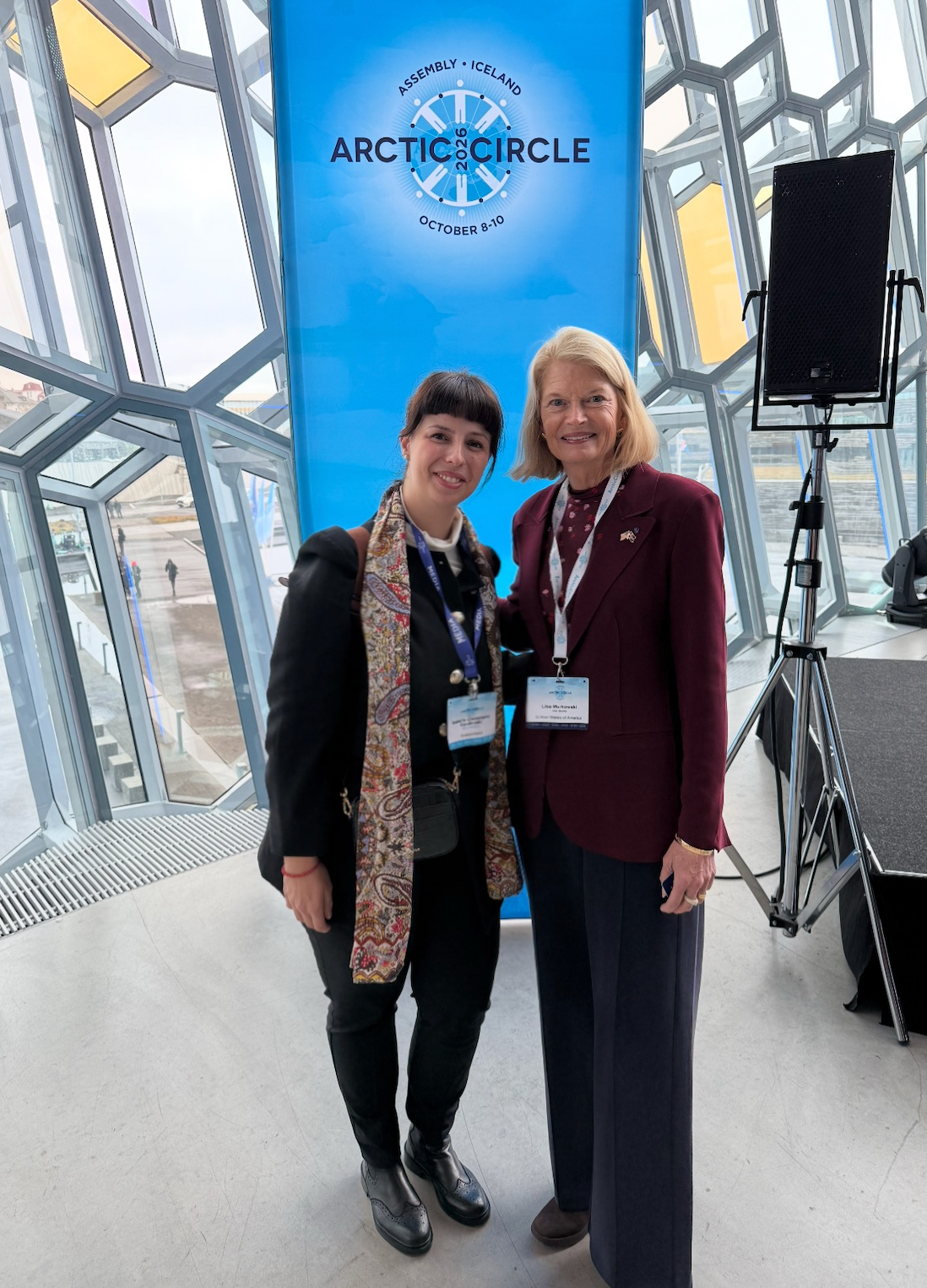
At the Arctic Circle Assembly 2026 in Reykjavík, I asked U.S. Senator Lisa Murkowski a question during the plenary discussion and continued the conversation with her afterwards.
Sources and further reading
- Arctic Circle · Assembly 2026
- Arctic Circle · A Dialogue with Senator Murkowski
- U.S. Senate · Bipartisan congressional delegation
- Marc Lanteigne · Alone Together: The Many Solitudes of Arctic Circle 2026
- High North News · Alaska and Arctic investment
- ArcticToday · Murkowski on rebuilding trust
- Lisa Murkowski · Continued partnership rather than possession
- U.S. Senate · Congressional engagement with Arctic allies